
Your blog post
Blog post description.
2/17/20253 دقيقة قراءة
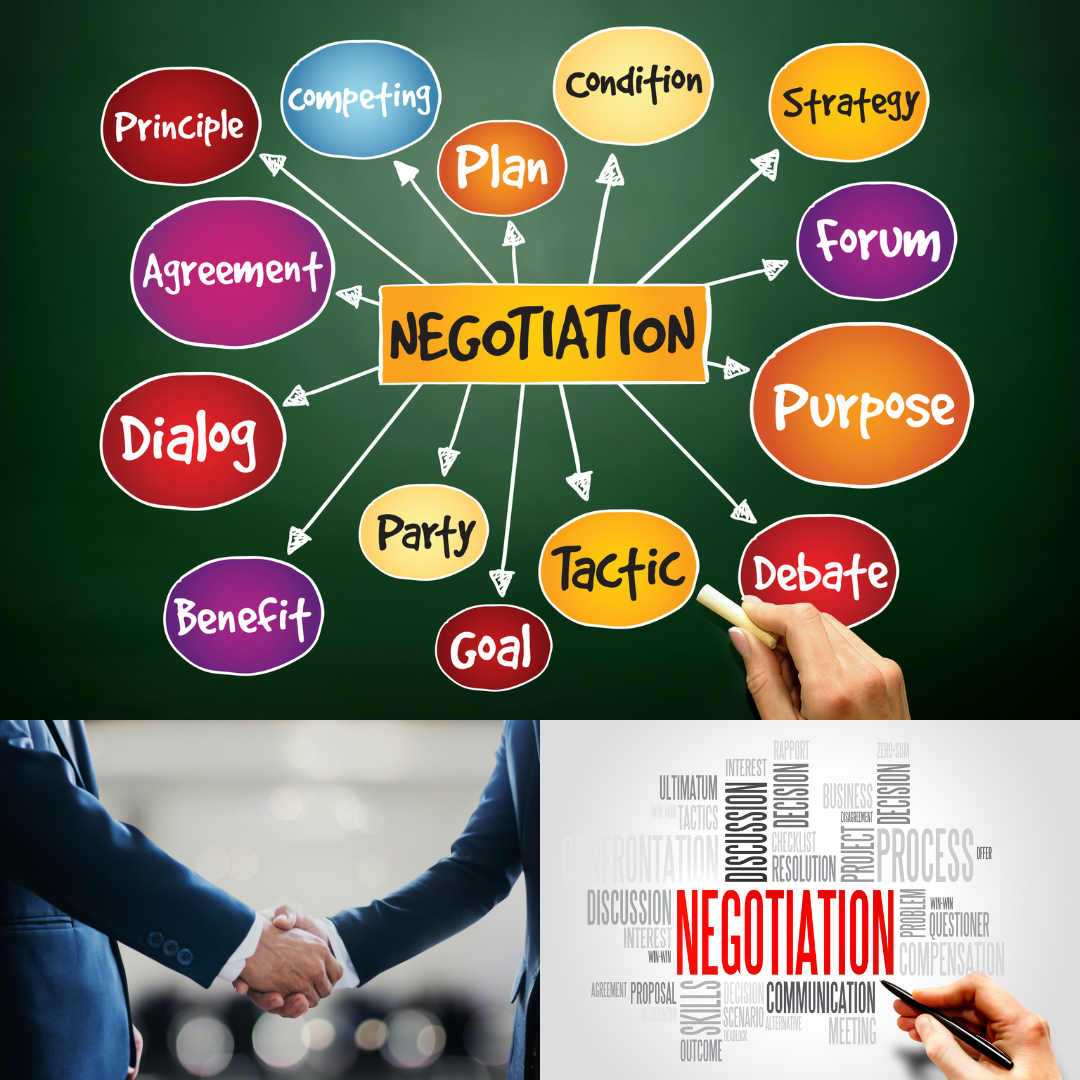
🎯 Negotiation Skills: 7 Key Steps for Success + 10 Essential Tactics
Negotiation is not just a skill—it’s an art that requires strategic preparation, deep understanding of the other party, and sharp situational awareness. Whether you’re negotiating a business deal, a salary increase, or a strategic partnership, proper preparation is the key to reaching a mutually beneficial agreement.
🔹 Before entering any negotiation, follow these seven essential steps:
📌 7 Steps to a Successful Negotiation
1️⃣ Define Your Goal Using the SMART Framework 🎯
✔ Specific: What exactly do you want to achieve?
✔ Measurable: How will you track your success?
✔ Achievable: Is your goal realistic based on current conditions?
✔ Relevant: Does it align with your long-term objectives?
✔ Time-bound: What is your deadline for achieving this goal?
2️⃣ Understand the Other Party’s Needs 🔍
Don’t negotiate based solely on your own interests. Instead, analyze the other party’s needs, priorities, and motivations for coming to the table.
3️⃣ Identify the Key Elements of Negotiation 🔥
What factors influence their decision?
What are the points of agreement and disagreement?
What variables might affect the negotiation outcome?
4️⃣ Define Your Concessions in Advance 🤝
What are you willing to compromise on? And what aspects are non-negotiable?
5️⃣ Utilize the "Package Deal" Approach 📦
Avoid negotiating on a single element—instead, present a comprehensive offer that increases the overall value of the deal.
6️⃣ Maintain Balance Throughout the Negotiation 🎭
Use a smart trade-off strategy, where you offer something valuable to the other party in exchange for something important to you.
7️⃣ Clearly Define What You Offer and Expect in Return 🎁
Don’t approach the negotiation only thinking about what you will gain—instead, focus on what you can offer and how the other party will benefit.
10 Powerful Negotiation Tactics
✅ 1. The Power of Silence 🤫
Sometimes, staying quiet forces the other party to reveal valuable information they didn’t intend to share.
✅ 2. Summarize the Agreement Regularly 📝
Throughout the negotiation, recap key points to avoid misunderstandings and misinterpretations.
✅ 3. Take Notes ✍️
Keeping a record of discussions ensures you stay in control and prevents any alteration of agreed-upon terms.
✅ 4. Build a Positive Atmosphere 😊
A comfortable and trusting environment makes the other party more willing to negotiate fairly.
✅ 5. Read Between the Lines 👀
Pay close attention to words, expressions, and tone—they often reveal unspoken concerns.
✅ 6. Balance Speaking and Listening ⚖️
Don’t dominate the conversation, but don’t be overly passive either—maintain a balance between presenting your perspective and listening actively.
✅ 7. Think Before Acting 🧠
Never rush into a decision under pressure—take time to assess all possible outcomes.
✅ 8. Hold Onto Your Best Offer Until the Right Moment 🃏
Don’t reveal your final offer too early, as this weakens your negotiating power.
✅ 9. Always Plan the Next Step 🚀
After reaching an agreement, schedule the next meeting or define a clear action plan to finalize the deal.
✅ 10. Differentiate Between Fixed and Variable Factors 🔄
Identify what is non-negotiable and what can be adjusted to optimize your negotiation strategy.
🍕 The Pizza Theory & Win-Win Negotiation: Maximizing Value for Both Parties
Negotiation doesn’t have to be a zero-sum game where one side wins and the other loses. Instead, it can be a strategic process that creates value for both parties, leading to a win-win outcome.
🎯 How Does Pizza Relate to Smart Negotiation?
Imagine negotiating how to divide a pizza with someone else. If both parties focus only on getting the biggest slice, the negotiation can quickly turn into a battle where one side feels disadvantaged, damaging trust and future collaboration.
However, a win-win mindset leads to a different approach:
What does each party truly value? One might prefer the crust, while the other prefers the cheesy center.
How can both sides get what they want? The solution might be to divide the pizza based on preference, rather than splitting it equally in an unsatisfactory way.
Smart resource allocation ensures satisfaction for both sides, rather than a rigid 50/50 split.
👉 Negotiation isn’t just about dividing the pie—it’s about making sure each side gets what matters most to them!
📌 Real-Life Example: Applying the Pizza Theory in Negotiation
🔹 Scenario: You’re negotiating a salary for a new job, but the employer refuses to increase the base pay.
🔹 Traditional (Win-Lose Thinking): You either accept the salary as offered or reject the job.
🔹 Smart (Win-Win Pizza Thinking): Instead of focusing only on base salary, you negotiate alternative benefits, such as flexible working hours, annual bonuses, training opportunities, or even a share in company profits.